- 11
- Mar
- 2026
Polygraph booklet
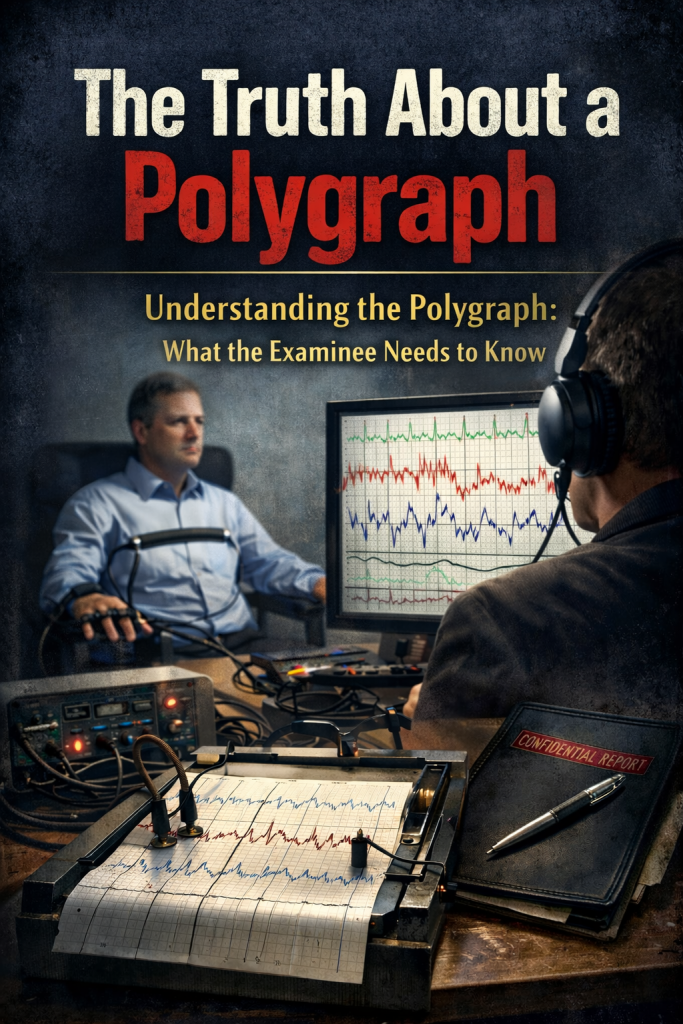
The Truth About a Polygraph: What Every Examinee Needs to Know is a practical and easy-to-follow Udemy course designed to help students understand the polygraph examination process with greater clarity, confidence, and peace of mind. Many people approach a polygraph test feeling anxious because they have heard stories, myths, or half-truths about what the process involves. This course was created to replace confusion with straightforward information and to help students know what to expect before they ever enter the examination room.
In this course, students will learn the purpose of a polygraph examination, how the process is structured, and what happens during each stage of the test. The course explains the pre-test interview, the actual testing phase, and the post-test discussion in clear language that is easy for anyone to understand. Students will also gain a better understanding of how questions are reviewed, why more than one chart is often collected, and why consistency and proper procedure matter so much in a professional examination.
This course also addresses many of the common fears and misunderstandings that surround polygraph testing. Instead of relying on rumor or television drama, students will be given a realistic look at how a properly conducted examination works. They will learn what the instrument is designed to record, what role the examiner plays, and why honesty, cooperation, and careful listening are important parts of the process. The goal of this course is not to make the experience sound intimidating, but to help examinees feel informed, prepared, and less uneasy.
This training is valuable for anyone who may be required to take a polygraph examination for employment, law enforcement screening, an investigation, or a personal matter. It is also useful for students of criminal justice, private investigators, security professionals, and anyone who simply wants to understand the truth behind the polygraph process.
The instructor of this course is Alan Key, a professional polygraph examiner and the founder of Central Washington Polygraph & Investigations and Clear Lens Truth Services. With a background rooted in law enforcement, truth verification, investigative work, and public education, Alan brings both field knowledge and a practical teaching style to the subject. His goal is to help people better understand the examination process, reduce unnecessary fear, and provide clear guidance based on real-world experience.
By the end of this course, students will have a much stronger understanding of what a polygraph examination is, how it is conducted, and what an examinee should know before, during, and after the process. Whether you are preparing for an upcoming examination or simply want reliable information from a knowledgeable source, this course will give you a solid foundation and a more confident view of what to expect.
LESSON 1
INTRODUCTION & COURSE PURPOSE
Understanding the Polygraph: What Examinees Need to Know
Opening
If you’re watching this course, there’s a good chance you’ve been told, or strongly encouraged, that you’ll be taking a polygraph examination. And if that sentence alone made your shoulders tighten just a little, you’re not alone.
For many people, the word polygraph brings up anxiety, confusion, and more than a few dramatic images from movies and television. Some people imagine a machine that can read minds. Others picture an interrogation room straight out of a crime drama. And many worry that being nervous, something most humans are very good at, might somehow be mistaken for dishonesty.
Let’s start by clearing the air right away.
This course exists to replace fear with understanding.
Not bravado. Not tricks. Not “how to beat the test.”
Just clarity.
By the end of this course, you should understand what a polygraph examination actually is, how it works, what your role is in the process, and, most importantly, what helps and hurts accuracy. When people understand the process, they tend to perform better, feel more at ease, and participate more effectively.
That’s good for you. And it’s good for the integrity of the exam.
Lesson 1.1 , What This Course Is (and Is Not)
Let’s talk first about what this course is.
This course is an educational walkthrough designed for examinees, people who may be asked to take a polygraph examination for employment, licensing, monitoring, administrative, or investigative reasons. You do not need a background in law enforcement, psychology, or physiology to benefit from this material. Everything will be explained in plain language, without jargon, and without assuming you already know anything about polygraphs.
This course is also examiner-neutral. Other than explaining about myself, it’s not company information will not be mentioned. The information you’re receiving is based on standard polygraph practices, widely accepted procedures, and ethical guidelines used across the profession.
Most importantly, this course is about helping you be an informed participant.
4
An informed examinee is calmer, clearer, and more consistent. And consistency, not calmness, is what matters most during a polygraph examination.
Now, just as important as what this course is, is what this course is not.
This is not a course on how to manipulate a polygraph. It is not a course on countermeasures. It is not a course on “beating” the test.
If you’ve spent any time online searching for information about polygraphs, you’ve probably already encountered bold claims, secret techniques, and confident promises that someone can teach you how to “pass” no matter what.
Here’s the professional reality: attempting to manipulate the process is one of the fastest ways to create confusing data, raise concerns, and complicate an otherwise straightforward examination.
This course takes the opposite approach.
Accuracy is the goal. Transparency is the tool. Understanding is the advantage.
Why This Course Exists
One of the biggest problems surrounding polygraph examinations is not the technology itself, it’s the lack of good information available to the public.
Many people arrive for their exam having heard things from friends, coworkers, internet forums, or social media that simply aren’t true. Others arrive having heard nothing at all, which can be just as unsettling.
When people don’t know what to expect, they tend to fill in the gaps with assumptions. Those assumptions often create unnecessary stress, and stress, when misunderstood, can interfere with communication.
This course exists to prevent that.
You deserve to know:
•
What will happen
•
Why it happens
•
What is expected of you
•
And how to approach the process in a way that supports accuracy
A polygraph exam should never feel like a mystery or a trap. When conducted properly, it is a structured, professional process designed to gather information, not to intimidate.
Lesson 1.2 , Why Polygraphs Are Used
Now let’s address a common question right up front:
5
Why are polygraphs still used?
Polygraph examinations are used because they provide structured, standardized insight into how a person responds to carefully designed questions under controlled conditions. They are not used in isolation, and they are not designed to replace investigations, background checks, or decision-making processes.
Instead, polygraphs are used as one tool among many.
You’ll see polygraphs used in several common settings:
•
Pre-employment or employment screening
•
Law enforcement or public safety hiring
•
Security clearance processes
•
Post-incident or administrative inquiries
•
Court-ordered or supervision-related monitoring
•
Voluntary examinations to clarify allegations
In all of these settings, the polygraph serves the same general purpose: to assess consistency between a person’s statements and their physiological responses to specific questions.
It is not about catching people “off guard.” It is not about surprise. And it is not about interrogation theatrics.
A professionally conducted polygraph exam is a structured interview supported by physiological data.
Clearing Up a Major Misunderstanding
Here’s something that surprises many people:
Polygraph examiners do not expect you to be calm.
They expect you to be human.
Nervousness is normal. Anxiety is common. Even people who are completely truthful often experience stress simply because the situation feels serious.
That’s accounted for in the process.
The exam does not hinge on a single question or a single reaction. Instead, examiners look for patterns across time, across questions, and across multiple data points.
This is why consistency matters more than intensity.
Being nervous does not equal deception. Being emotional does not equal dishonesty. And having a strong reaction does not automatically mean anything by itself.
Later in the course, we’ll break this down in much more detail. For now, just know this: the polygraph process is designed with normal human behavior in mind.
6
Your Role in the Process
Another important idea we need to introduce early is this:
A polygraph examination is not something that happens to you. It is something you actively participate in.
Your role is not to “perform.” Your role is not to “control” your body. Your role is not to guess what the examiner wants.
Your role is simple, but important:
•
Listen carefully
•
Answer honestly
•
Ask for clarification when needed
•
Follow instructions as given
That’s it.
People sometimes make the mistake of trying to manage their breathing, suppress reactions, or mentally rehearse answers in an attempt to “do well.” Ironically, those efforts often create more inconsistency, not less.
Natural, straightforward participation is what supports accuracy.
What You’ll Learn in This Course
Let’s briefly talk about what’s coming next so you know what to expect.
In the next sections, we’ll walk through:
•
How polygraph instruments work at a basic level
•
What is actually being measured, and what is not
•
The step-by-step structure of a typical exam
•
The pre-test interview, the in-test phase, and the post-test phase
•
Common fears and misconceptions
•
Mistakes people unintentionally make
•
How to prepare appropriately without overthinking
Nothing in this course requires you to agree with polygraph testing as a concept. You don’t have to love the process. You don’t even have to feel comfortable with it right away.
The goal is understanding, not persuasion.
When people understand what’s happening, they tend to experience less anxiety, communicate more clearly, and participate more effectively. That benefits everyone involved.
A Quick Word About Ethics and Professionalism
7
One final point before we move on.
Ethical polygraph examinations are built on three foundations:
1.
Voluntary participation (within the boundaries of the situation)
2.
Informed consent
3.
Professional conduct
You should always be treated respectfully. You should always be allowed to ask questions. And you should always understand the scope of the exam.
This course exists to support those principles.
Closing This Lesson
So let’s take a breath, literally and figuratively.
A polygraph examination is not magic. It is not a mind reader. And it is not designed to trip you up.
It is a structured process that works best when people understand their role and approach it honestly and calmly.
In the next lesson, we’ll begin breaking down how polygraphs actually work, what they measure, what they don’t, and why that distinction matters far more than most people realize.
For now, just remember this:
Understanding the process is not a disadvantage. It’s exactly the point.
Let’s move on.
8
LESSON 2
HOW A POLYGRAPH WORKS
Understanding What Is Measured, and What Is Not
Opening: Let’s Demystify the Machine
Now that we’ve covered what this course is about and why polygraphs are used, it’s time to talk about the part most people are curious, and often confused, about:
The polygraph instrument itself.
For many examinees, the machine is the most intimidating part of the process. Tubes, sensors, wires, screens, none of it looks especially relaxing. Add a few decades of movies and television portrayals, and it’s no surprise people walk in thinking they’re about to be strapped into something that can read their thoughts.
So let’s start with the most important clarification of this entire course:
A polygraph does not detect lies.
It detects physiological activity that is associated with how people respond to questions.
That distinction matters more than most people realize.
Lesson 2.1 , What the Polygraph Actually Measures
A polygraph instrument records several basic physiological signals at the same time. These signals are not unique to lying. They are normal bodily responses that occur during stress, focus, concern, surprise, or emotional engagement.
In other words, responses you experience every day.
Let’s break them down one by one.
- Breathing (Respiration)
The polygraph monitors breathing patterns using flexible tubes placed around the chest and abdomen. These tubes do not restrict breathing, and they don’t measure oxygen levels. They simply record breathing rhythm and consistency.
Why breathing?
Because breathing is one of the first systems affected when people experience stress, concentration, or internal conflict. People may breathe slightly faster, slower, or more shallowly when responding to certain questions.
9
Important note: There is no “correct” way to breathe during a polygraph.
Trying to control your breathing often creates more irregular patterns than simply letting it happen naturally. The goal is not perfect breathing, it’s consistent breathing. - Cardiovascular Activity (Heart Rate & Blood Pressure)
The polygraph also monitors cardiovascular changes using a standard blood pressure cuff, similar to what you’d see in a doctor’s office.
This component records:
•
Heart rate
•
Blood pressure changes
•
Relative cardiovascular activity
Again, this is not measuring deception directly. It’s recording how your cardiovascular system responds when questions are asked.
Heart rate changes can occur for many reasons:
•
Attention
•
Emotional response
•
Anticipation
•
Concern about consequences
All of those are normal. The examiner looks for patterns, not isolated spikes. - Electrodermal Activity (Skin Conductance)
This is often the most misunderstood component.
Electrodermal activity measures very small changes in the skin’s ability to conduct electricity. These changes are influenced by sweat gland activity, which is controlled by the nervous system.
To be clear:
•
This is not measuring how much you’re sweating
•
It’s not detecting guilt
•
And it’s not a “lie meter”
It’s measuring physiological arousal, which can increase when a question is personally significant.
Think of it like this: your body reacts when something matters to you. That reaction is what’s being recorded.
10
What All These Signals Have in Common
Here’s the key takeaway:
None of these signals mean anything on their own.
A single deep breath, a heartbeat change, or a skin response does not indicate deception. What matters is how these responses appear together, over time, and in response to different types of questions.
This is why polygraph examinations involve:
•
Multiple questions
•
Repeated question presentations
•
Structured formats
•
Comparative analysis
The instrument records data. The examiner interprets patterns, not moments.
Lesson 2.2 , What the Polygraph Does Not Measure
Now let’s talk about what the polygraph does not do, because this is where many myths live.
The Polygraph Does Not Read Minds
There is no sensor that detects thoughts, intentions, or memories. The polygraph does not know why your body responds, it only records that it did.
The meaning of those responses depends entirely on context, question structure, and consistency.
The Polygraph Does Not Detect Emotions
Fear, anxiety, anger, embarrassment, none of these emotions are directly measured. You can feel all of them and still produce clear, interpretable data.
Examiners expect emotions. Emotional reactions are part of being human.
The Polygraph Does Not “Know” the Truth
The polygraph does not compare your answers to some hidden truth database. It does not know what actually happened in your life.
It compares how your body responds to different types of questions asked under the same conditions.
11
A Quick Word About “Nervousness”
Let’s address one of the most common concerns head-on:
“I’m nervous, does that mean I’ll fail?”
No.
If nervousness alone caused people to fail polygraphs, no one would ever pass one.
Examiners expect nervousness. The testing formats are designed to account for it. What matters is relative change, not absolute stress.
Being nervous throughout the exam is very different from reacting disproportionately to specific questions.
And remember, trying to suppress nervousness usually backfires.
Why Question Design Matters
This is where the human side of the polygraph becomes important.
Polygraph exams are not random question-and-answer sessions. They use carefully structured questions designed to create meaningful comparisons.
Questions are typically:
•
Reviewed in advance
•
Clearly worded
•
Asked exactly the same way each time
This consistency is critical. When the structure is stable, the data becomes more interpretable.
That’s why the pre-test interview, which we’ll cover in the next section, is so important. It ensures that:
•
You understand every question
•
The examiner understands your background
•
There are no surprises during data collection
Why “Trying to Beat the Machine” Doesn’t Work
At this point, it’s worth addressing something many people are tempted to try, often after reading questionable advice online.
Attempting to manipulate your physiology, control reactions, or “outsmart” the test usually creates:
•
Inconsistent data
•
Unnatural patterns
•
Examiner concern
12
•
Additional scrutiny
Ironically, people who are trying hardest to “pass” are often the ones who complicate the process the most.
Polygraph exams are designed to detect patterns, not perfection.
The best approach is also the simplest:
•
Be honest
•
Be consistent
•
Let your body do what it naturally does
The Examiner’s Role vs. the Machine’s Role
Another important clarification:
The polygraph instrument does not make decisions.
The examiner does.
The machine records data. The examiner evaluates that data within the context of:
•
The interview
•
The question structure
•
The examinee’s explanations
•
Professional standards and scoring rules
This is why examiner training, ethics, and experience matter so much, and why professional exams are never based on a single reaction or a single chart.
Why Polygraphs Use Multiple Charts
You may notice during an exam that questions are asked more than once, often in multiple rounds.
This isn’t because the examiner didn’t hear you the first time.
It’s because:
•
Repetition allows pattern confirmation
•
Data stability improves accuracy
•
Random fluctuations can be ruled out
Consistency across charts is far more meaningful than any single response.
Bringing It All Together
13
So let’s summarize this lesson in plain language.
A polygraph:
•
Measures physiological activity, not lies
•
Records breathing, cardiovascular activity, and skin conductance
•
Looks for patterns over time
•
Relies on structured questions and consistency
•
Accounts for normal human anxiety
•
Depends on professional interpretation, not automation
It is not magic. It is not perfect. And it is not something you need to “outperform.”
It works best when people understand the process and participate honestly.
Closing This Lesson
If there’s one idea to take with you from this lesson, it’s this:
The polygraph is not judging you. It is observing how your body responds to questions.
Your job is not to manage the machine. Your job is to understand the process and participate naturally.
In the next lesson, we’ll walk step-by-step through what actually happens during a polygraph examination, from the moment you arrive to the moment you leave, so there are no unknowns left.
And as the mystery fades, so does most of the anxiety.
Let’s move on.
14
LESSON 3
THE POLYGRAPH EXAM PROCESS STEP-BY-STEP
What Happens Before, During, and After the Charts
Opening: The Good News About Polygraphs
If you’re someone who likes to know what’s coming next, you’re going to like this lesson.
Most polygraph anxiety comes from uncertainty, people don’t know what the process looks like, how long it takes, what they’re allowed to do, or whether they’re going to be surprised with something out of left field.
Here’s the good news:
A properly conducted polygraph examination is usually predictable, structured, and repeatable.
It’s not a magic ritual. It’s not a psychological ambush. And despite what Hollywood taught us, it’s rarely dramatic.
Think of it more like a professional procedure: a structured interview with a data collection component. Today, we’re going to walk through the process step-by-step so you know what to expect.
By the end of this lesson, the polygraph should feel less like a mystery box and more like a checklist.
Lesson 3.1 , The Pre-Test Interview (Walkthrough)
The pre-test interview is the foundation of the entire exam. In many cases, it’s the longest part. It’s also the part that most strongly affects whether the results are clear and interpretable.
If you remember one thing from this section, let it be this:
Most of the “quality control” happens before you’re even connected to the instrument.
Step 1: Arrival and Initial Setup
When you arrive, you’ll usually check in, show identification, and receive an overview of the process. Depending on the setting, you may be asked to:
•
Review consent forms
•
Acknowledge policies (for example: no recording, no phones, or limited breaks)
•
Confirm basic information (name, background, purpose of exam)
This is also where professional examiners set expectations:
•
How long the exam may take
•
How the questioning works
15
•
What your rights and responsibilities are in that setting
This part should feel professional and calm, more like a medical intake than an interrogation scene.
Step 2: The Examiner Explains the Process
A competent examiner will explain the phases of the exam in plain language. They’ll typically cover:
•
The interview portion
•
The instrument portion
•
The review portion
•
How the results are handled or communicated
This isn’t just “nice.” It’s part of informed participation and is one of the reasons ethical polygraph exams include clear explanations.
Step 3: Case/Background Discussion
Now comes a key part: gathering background context.
For a pre-employment exam, that might include:
•
Work history
•
Drug use history
•
Criminal history questions
•
Integrity-related questions
For an investigative exam, it might include:
•
A timeline of events
•
Your relationship to the issue
•
What you remember, what you don’t
•
What evidence exists and what is disputed
This phase is not about “trapping you.” It’s about clarifying:
•
What questions are relevant
•
What words mean to you
•
What timeframes apply
•
What details need to be settled before testing
Step 4: Question Review (This Is Huge)
One of the most important steps is question review.
The examiner will go over the questions in advance. You should:
•
Hear each question
•
Understand each question
•
Be able to ask for clarification
•
Confirm the scope and timeframe
16
This is where people sometimes make a mistake: they nod along even when they don’t fully understand a question because they don’t want to look confused.
Let’s make this simple:
If a question is unclear, ask.
That is not “being difficult.” That is being responsible.
Unclear questions create unclear results.
Examples of things worth clarifying:
•
What time period is being asked about?
•
What does a word mean in this context? (“stolen,” “illegal,” “used,” “serious,” etc.)
•
Does the question include accidental actions, misunderstandings, or only intentional behavior?
A solid examiner wants clean, clear questions. That makes their job easier too.
Step 5: Instructions and Ground Rules
Before moving into the in-test phase, you’ll get instructions, usually simple ones, like:
•
Sit still as best you can
•
Answer out loud with “Yes” or “No” (or another instructed format)
•
Wait for the full question before answering
•
Don’t explain during the chart unless instructed
•
Ask for breaks if needed (usually between charts)
This is also where you should disclose anything that affects comfort or clarity, like:
•
Pain, injuries, breathing issues
•
Medications that affect alertness
•
High anxiety or panic history
•
Sleep deprivation
•
Anything that would make sitting still difficult
You’re not expected to be superhuman. You’re expected to be straightforward.
Lesson 3.2 , The In-Test Phase (Data Collection) (Walkthrough)
This is the part most people imagine when they think of “the polygraph.” It’s also usually the shortest part, because once everything is explained and reviewed, the data collection is fairly systematic.
Step 1: Getting Connected to the Instrument
You’ll be connected to the sensors we discussed earlier:
•
Breathing tubes around chest/abdomen
•
Blood pressure cuff
17
•
Skin conductance sensors (often on fingers)
This should not be painful, and it should not restrict your breathing. The cuff can feel snug, like any blood pressure cuff, and it may inflate depending on the system used.
If anything feels uncomfortable or too tight, say so immediately. Comfort supports better data quality.
Step 2: Baseline/Acclimation (Sometimes)
Many examiners begin with brief “practice” or orientation questions. Not every format uses this, but the goal, when it’s used, is to help you settle into the rhythm of:
•
hearing a question
•
responding clearly
•
maintaining a steady posture
This is not a trick. It’s often just a warm-up.
Step 3: The Actual Charts (Question Sets)
Now you’ll move into the structured question sequence.
Important things to know:
•
The questions will likely be asked in a set order
•
The same questions may be asked more than once
•
The examiner will keep the wording consistent
•
Your answers should be short and direct, exactly as instructed
This can feel repetitive. That’s normal. Repetition helps examiners compare patterns across time.
Also: silence between questions is normal. Examiners often allow a brief pause so your physiology returns closer to baseline before the next question.
What You Should Do During the Charts
Your job is boring on purpose:
•
Sit still as best you can
•
Keep your feet and hands relatively still
•
Look forward (or follow the examiner’s direction)
•
Listen to the full question
•
Answer clearly with the instructed response
That’s it.
This is not the time to give speeches, explain your life story, or add footnotes.
If a question confuses you mid-chart, you can say something like:
•
“I need that repeated,” or
•
“I’m not sure I understood that question.”
18
Then the examiner can stop and clarify between charts.
Common Mistake: Overthinking
A lot of examinees try to “game” the questions mentally. They answer internally with a paragraph, then try to compress it into “yes” or “no,” and they worry that the machine is judging their internal debate.
Remember:
•
The machine records physiology
•
The examiner evaluates patterns
•
The pre-test phase exists so your answers can be clean and consistent
If you find yourself spiraling into mental over-analysis, return to the basics:
•
Listen
•
Understand
•
Answer honestly
Lesson 3.3 , The Post-Test Phase (Walkthrough)
Once the charts are complete, the exam isn’t necessarily “over,” but you’re through the data collection part.
Step 1: Disconnect and Reset
You’ll be disconnected from the sensors. Often, examiners will take a moment to review notes, charts, or scoring.
Step 2: Discussion (Sometimes Brief, Sometimes Longer)
Depending on the setting, the examiner may:
•
Ask follow-up questions
•
Clarify areas that need explanation
•
Address inconsistencies in statements
•
Invite you to provide context for anything unclear
This is still part of the professional process, not a “trap.”
If you made a mistake earlier, misunderstood a question, forgot a detail, or realized you should clarify something, this is the moment to handle it calmly and directly.
Step 3: Results and What You May Hear
This part varies widely depending on:
•
agency policy
•
employment process rules
•
legal settings
•
examiner protocol
19
You might hear results immediately, or you might not. Some examiners can say something like:
•
“The data looks consistent,” or
•
“I’m going to review this further,” or
•
“The results are not clear and may require additional steps.”
You may also hear terms like:
•
No deception indicated (often meaning the data appears consistent with truthful responding)
•
Inconclusive (meaning results are not clear enough to interpret confidently)
•
Needs additional review (meaning scoring or quality checks are pending)
One important thing to remember:
Not hearing immediate results doesn’t mean anything bad. Sometimes it’s policy. Sometimes it’s quality control.
Closing: What You Should Take From This Lesson
Let’s summarize the process in one simple line:
Pre-test sets the rules. In-test collects the data. Post-test clarifies and wraps up.
If your exam is conducted properly, you should:
•
understand the questions before charts begin
•
know what’s expected of you during charts
•
have a clear sense of next steps afterward
And if you don’t, ask.
In the next lesson, we’ll tackle the most common fears and misconceptions that show up during polygraphs, what people worry about, what actually matters, and what mistakes are most likely to hurt accuracy.
Because once you understand what’s normal, it becomes much easier to stop treating the process like a mystery and start treating it like what it is:
A structured procedure you can navigate with clarity.
20
LESSON 4
THE IMPORTANCE OF THE PRE-TEST INTERVIEW
Why the Conversation Before the Charts Matters More Than You Think
Opening: The Most Misunderstood Part of the Exam
If you asked ten people who’ve taken a polygraph what part mattered most, many would point to the machine, the sensors, or the moment the questions started.
And that’s understandable, those parts look serious.
But here’s a professional truth that surprises a lot of people:
The pre-test interview is the most important part of the entire polygraph examination.
Not the wires. Not the charts. Not the data.
The conversation.
In fact, if the pre-test interview is done well, the rest of the exam usually runs smoothly. If it’s rushed, misunderstood, or incomplete, even the best equipment in the world can’t fix that.
So in this lesson, we’re going to focus on why the pre-test interview exists, what it’s supposed to accomplish, and how you can use it to your advantage, ethically, transparently, and calmly.
What the Pre-Test Interview Actually Is
Let’s start by redefining the pre-test interview, because many people misunderstand its purpose.
The pre-test interview is not:
•
a warm-up interrogation
•
a psychological trick
•
a test before the test
•
an attempt to “get you to confess”
Instead, it’s a structured clarification phase designed to make sure everyone is working from the same understanding before any data is collected.
Think of it like setting the rules before a game starts.
If the rules aren’t clear, the outcome doesn’t mean much.
21
Why the Pre-Test Interview Exists
There are three primary reasons the pre-test interview exists. - To Ensure Question Clarity
Polygraph questions must be:
•
clearly worded
•
narrowly defined
•
understood the same way by both examiner and examinee
Words that seem simple, like steal, use, lie, illegal, or serious, can mean very different things to different people.
For example:
•
Does “use” include trying something once?
•
Does “illegal” include things that were legal at the time?
•
Does “steal” include borrowing without permission and returning it?
If those definitions aren’t clarified before testing, the data becomes muddy.
The pre-test interview is where that clarity happens. - To Establish Context
Physiological responses don’t exist in a vacuum. Context matters.
The examiner needs to understand:
•
relevant timelines
•
background history
•
prior disclosures
•
what you’ve already admitted or explained
This doesn’t mean reliving your entire life story. It means setting boundaries so the questions make sense.
For example:
•
“We’re only talking about the last five years.”
•
“We’re excluding juvenile behavior.”
•
“We’re focusing on intentional actions, not accidents.”
When context is clear, questions can be precise, and precision supports accuracy. - To Reduce Surprises During Testing
Surprises are bad for data.
22
When people are caught off guard by a question, they often react strongly, not because they’re deceptive, but because they weren’t prepared for the scope or wording.
The pre-test interview exists so:
•
no question is a surprise
•
no wording is confusing
•
no topic comes out of nowhere
A fair exam is a predictable exam.
Your Role in the Pre-Test Interview
This is where many examinees misunderstand their role.
Some people think the pre-test interview is a passive phase, something they just sit through until it’s “over.” Others think they should say as little as possible to avoid complications.
Neither approach helps.
Your role in the pre-test interview is active participation, not performance.
That means:
•
listening carefully
•
answering honestly
•
asking questions when something is unclear
•
correcting misunderstandings immediately
If something feels vague, now is the time to fix it, not later.
Asking for Clarification Is Not a Red Flag
Let’s address a common fear:
“If I ask too many questions, won’t that make me look suspicious?”
No.
In fact, the opposite is usually true.
Clear, thoughtful questions often signal:
•
engagement
•
understanding
•
a desire for accuracy
23
What raises concern is when someone agrees to questions they clearly don’t understand, or later claims they misunderstood something they never asked about.
So if a question makes you pause internally, speak up externally.
Examples of appropriate clarification:
•
“What time period does that cover?”
•
“Does that include accidental actions?”
•
“Can you explain what you mean by that word?”
•
“Are we talking about personal use or any involvement at all?”
These are responsible questions.
Common Pre-Test Mistake #1: Over-Disclosing Out of Anxiety
Some examinees react to stress by over-talking. They volunteer every thought, hypothetical, or long-resolved issue because they want to be “extra honest.”
Honesty is good. Over-disclosure can be confusing.
The pre-test interview is not a confessional. It’s a clarification process focused on relevant information.
Stick to:
•
the question being asked
•
the timeframe discussed
•
intentional behavior, not speculation
If you’re unsure whether something is relevant, ask.
Common Pre-Test Mistake #2: Holding Back Because “It Might Hurt Me”
On the other end of the spectrum, some people minimize or omit information because they’re afraid it will complicate the exam.
Here’s the professional reality:
Undisclosed information is more likely to cause problems than disclosed information.
Why?
Because undisclosed issues often resurface as:
•
internal concern during testing
•
mental distraction
•
inconsistent responses
•
later explanations that seem reactive
24
The pre-test interview exists so those issues can be addressed before they affect the data.
Why the Examiner Asks Follow-Up Questions
During the pre-test interview, the examiner may circle back to certain topics or ask similar questions in different ways.
This isn’t a trick.
It’s how examiners:
•
confirm understanding
•
test consistency in explanations
•
refine wording
•
eliminate ambiguity
Consistency in explanation supports consistency in physiology.
The Pre-Test Interview and Anxiety
Here’s another important point:
The pre-test interview often reduces anxiety, even if it feels uncomfortable at first.
Why?
Because once:
•
questions are reviewed
•
expectations are clear
•
surprises are removed
Your brain stops filling in the blanks with worst-case scenarios.
Uncertainty fuels anxiety. Clarity reduces it.
That’s why rushing through the pre-test interview is never a good idea.
What a Good Pre-Test Interview Feels Like
A well-conducted pre-test interview usually feels:
•
calm
•
structured
•
professional
•
conversational but focused
25
You should not feel:
•
rushed
•
confused
•
pressured to agree to unclear wording
•
afraid to ask questions
If something feels off, it’s appropriate to say so, respectfully and clearly.
A Note on Honesty vs. Perfection
Many examinees enter the pre-test interview thinking they need to present a perfect version of themselves.
That’s not the goal.
The goal is accuracy, not perfection.
Most polygraph exams are not asking whether you’ve lived a flawless life. They’re asking about specific behaviors, within defined limits, for specific reasons.
Be honest. Be clear. Be precise.
Why the Pre-Test Interview Protects You
Here’s something people don’t always realize:
The pre-test interview protects you just as much as it supports the exam.
It ensures:
•
you know what you’re being asked
•
you’re not misinterpreted
•
your answers are evaluated fairly
•
the data reflects the intended scope
Skipping or rushing this phase increases the risk of misunderstanding, on both sides.
Bringing It All Together
Let’s summarize the importance of the pre-test interview in one sentence:
The pre-test interview is where accuracy is built, or lost, before the machine ever turns on.
It’s where:
•
questions are shaped
26
•
definitions are agreed upon
•
context is established
•
anxiety is reduced
•
surprises are eliminated
Treat it seriously, but not fearfully.
Closing This Lesson
If you take nothing else from this lesson, remember this:
The pre-test interview is not something to “get through.” It’s something to use.
Use it to clarify. Use it to understand. Use it to ensure fairness.
In the next lesson, we’ll talk about common fears, misconceptions, and mistakes that examinees make, and how to avoid them, so you don’t unintentionally sabotage an otherwise clean, straightforward exam.
Once you understand what really matters, the process becomes far less intimidating, and far more manageable.
27
Absolutely, here’s Lesson 5: How to Prepare the Right Way, written to match the tone and structure of the previous lessons: lighthearted, professional, expert, reassuring, and examinee-focused. Length is ~1,500 words, clean for narration or teleprompter use.
LESSON 5
HOW TO PREPARE THE RIGHT WAY
What Actually Helps, and What Quietly Hurts, Polygraph Accuracy
Opening: Preparation Without the Panic
When people hear they have a polygraph coming up, one of two things usually happens.
Some people do nothing at all and hope for the best. Others prepare like they’re studying for a final exam they didn’t know existed until yesterday.
Neither extreme is ideal.
A polygraph is not something you can “study for” in the traditional sense, but that doesn’t mean preparation doesn’t matter. It does. The key is preparing the right way.
In this lesson, we’re going to talk about what genuinely helps polygraph accuracy, what people think helps but actually causes problems, and how to show up in the best possible condition, physically, mentally, and emotionally.
This is about preparation, not performance.
Part 1: The Goal of Preparation
Let’s start with a simple question:
What are you preparing for?
The goal of preparation is not to control the outcome. It’s not to manage your physiology. And it’s definitely not to “outsmart” the process.
The goal is clarity and consistency.
A well-prepared examinee:
•
understands what’s happening
•
is rested and alert
•
is not distracted by avoidable issues
•
participates naturally and honestly
28
That’s it.
Everything else is noise.
Part 2: Physical Preparation (The Boring Stuff That Matters)
Let’s talk about the basics, the things people overlook because they seem too simple to matter.
Sleep: Don’t Skip This One
Get a normal night’s sleep before your exam.
You don’t need to be a sleep champion, but showing up exhausted:
•
increases stress responses
•
reduces concentration
•
makes questions feel harder than they are
If you didn’t sleep well, say so during the pre-test interview. That’s better than pretending you’re fine.
Eat Normally
Eat a regular, balanced meal before your exam.
Skipping food can:
•
increase irritability
•
cause lightheadedness
•
exaggerate physiological responses
You don’t need a special “polygraph diet.” Just eat like a normal human.
Stay Hydrated (Within Reason)
Drink water as you normally would. Dehydration can cause discomfort and distraction. Overhydration can lead to bathroom anxiety.
Aim for normal.
Part 3: Medications, Substances, and What to Disclose
This is an area where honesty matters more than optimization.
Prescribed Medications
Continue taking prescribed medications as directed unless your doctor says otherwise.
Do not stop medications to “improve” results. That often causes:
29
•
withdrawal effects
•
increased anxiety
•
physical symptoms that complicate the exam
Always disclose medications during the pre-test interview. This helps the examiner interpret the data appropriately.
Caffeine and Nicotine
If you normally consume caffeine or nicotine, moderate use is usually better than abrupt abstinence.
Going cold turkey can increase:
•
agitation
•
headaches
•
restlessness
The rule of thumb is consistency, not purity.
Alcohol and Recreational Substances
Avoid alcohol or recreational drugs before the exam. Even if you feel fine, they can:
•
impair concentration
•
affect physiological baselines
•
raise questions during intake
This is not the time to experiment.
Part 4: Mental Preparation (Where People Go Wrong)
This is the biggest preparation pitfall.
Many examinees believe they need to mentally rehearse answers, suppress reactions, or “stay calm at all costs.” That mindset usually backfires.
You Do Not Need to Be Calm
Let’s say this clearly:
You do not need to be calm to produce accurate polygraph data.
You need to be consistent.
Trying to force calmness often leads to:
•
breath control
•
muscle tension
•
mental distraction
•
irregular patterns
30
Instead of trying to be calm, aim to be present.
Listen. Answer. Move on.
Avoid Overthinking the Questions
Some people prepare by imagining every possible version of every possible question. They try to anticipate trick wording or hidden meanings.
This creates:
•
cognitive overload
•
anxiety
•
internal debate during the charts
Remember:
•
Questions are reviewed in advance
•
Wording is clarified
•
Surprises are minimized
Trust the process you’ve already learned about.
Part 5: Internet Advice, What to Ignore
At this point, it’s worth addressing the online elephant in the room.
If you’ve Googled polygraphs, you’ve probably seen:
•
breathing techniques
•
muscle movements
•
mental math tricks
•
“foolproof” methods guaranteed to work
Here’s the professional reality:
Most of that advice creates patterns that examiners are trained to notice, and it often produces inconclusive or problematic results.
Countermeasures:
•
reduce data clarity
•
raise examiner concern
•
prolong the process
•
complicate interpretation
Even for truthful examinees, this can turn a straightforward exam into a messy one.
31
The best preparation is not clever, it’s honest.
Part 6: Practical Day-Of Preparation
Let’s talk about the day of the exam.
Arrive Early (But Not an Hour Early)
Give yourself enough time to:
•
park
•
check in
•
use the restroom
•
settle in
Rushing increases stress. Excessively early arrival can increase anticipation anxiety.
Aim for comfortable punctuality.
Dress Comfortably and Professionally
You don’t need formal attire unless instructed, but:
•
avoid overly tight clothing
•
avoid bulky items that interfere with sensors
•
wear something you can sit in comfortably for a while
Comfort supports consistency.
Turn Off the “Outcome Obsession”
One of the biggest mental shifts you can make is this:
Focus on process, not outcome.
When people obsess over results, they tend to:
•
monitor their reactions
•
second-guess answers
•
become hyper-self-aware
Instead, treat the exam like a structured conversation with clear rules.
Your job is participation, not prediction.
32
Part 7: What to Bring With You (and What Not To)
Bring:
•
valid identification
•
required paperwork
•
glasses or hearing aids if needed
•
a calm, cooperative mindset
Do not bring:
•
notes on “how to pass”
•
devices you’re not allowed to have
•
expectations that the exam will feel perfect
Part 8: The Right Mindset
Let’s summarize the mindset that helps most.
Helpful mindset:
•
“I understand the process.”
•
“I will answer honestly.”
•
“I don’t need to manage my body.”
•
“I can ask for clarification.”
•
“I can handle this one step at a time.”
Unhelpful mindset:
•
“I have to stay perfectly calm.”
•
“One reaction will ruin everything.”
•
“I need to control the machine.”
•
“I can’t ask questions.”
One of these supports clarity. The other fuels anxiety.
Part 9: If You’re Still Nervous (That’s Normal)
Even with good preparation, many people still feel nervous.
That’s okay.
Nervousness does not equal failure. Anxiety does not equal deception.
The process is designed for normal human responses, not robotic calm.
If anxiety feels overwhelming, mention it during the pre-test interview. Professional examiners account for this.
33
Closing: Preparing the Right Way Is Simple
Let’s bring this lesson home.
Preparing the right way means:
•
taking care of basic physical needs
•
being honest about medications and conditions
•
avoiding internet myths
•
understanding the process
•
showing up ready to participate, not perform
You don’t need tricks. You don’t need control. You don’t need perfection.
You need clarity and honesty.
In the next lesson, we’ll talk about common fears, misconceptions, and mistakes that trip people up, and how to avoid them, so you can walk into your exam informed, grounded, and confident.
34
Absolutely, here’s Lesson 6: Your Rights, Responsibilities, and Ethics, written to match the tone and depth of the previous lessons: lighthearted, professional, expert, and reassuring, examinee-focused, and ~1,500 words, ready for narration or teleprompter use.
LESSON 6
YOUR RIGHTS, RESPONSIBILITIES, AND ETHICS
What You’re Entitled To, What’s Expected of You, and How Professional Polygraphs Are Supposed to Work
Opening: Power, Fairness, and Knowing Where You Stand
Whenever people hear the word exam, they tend to think in terms of pass or fail. When they hear polygraph, they often add another layer: power imbalance.
Who’s in control? What can I say? What happens if I say the wrong thing?
These are reasonable questions, and the answers matter.
A professionally conducted polygraph examination is not a free-for-all. It’s governed by rules, ethical standards, and expectations on both sides. You are not walking into a situation where the examiner has unlimited authority or where you have no voice.
In this lesson, we’re going to talk about three things:
1.
Your rights as an examinee
2.
Your responsibilities during the process
3.
The ethical framework that professional examiners are expected to follow
Understanding these doesn’t make you difficult. It makes you informed.
Part 1: Your Rights as an Examinee
Let’s start with what you’re entitled to.
While the exact rules can vary depending on the country, agency, employer, or legal setting, there are common rights that apply to ethical polygraph examinations almost everywhere.
Right #1: The Right to Be Informed
You have the right to understand:
35
•
why the exam is being conducted
•
what topics will be covered
•
how the process works
•
what the possible outcomes are
A professional examiner should explain the procedure in clear, plain language, not in technical jargon designed to intimidate.
If something is unclear, you have the right to ask questions until it makes sense.
Right #2: The Right to Review the Questions in Advance
This is a big one.
Ethical polygraph exams do not involve surprise questions during data collection. You should know:
•
the wording of each relevant question
•
the timeframe involved
•
the meaning of key terms
If you are uncomfortable agreeing to a question you don’t understand, you are exercising your rights, not being uncooperative.
Right #3: The Right to Ask for Clarification or Breaks
You are allowed to:
•
ask for clarification during the pre-test interview
•
request reasonable breaks (usually between charts)
•
inform the examiner of discomfort, pain, or anxiety
Silently suffering through confusion or discomfort helps no one.
Right #4: The Right to Professional Treatment
You have the right to be treated:
•
respectfully
•
professionally
•
without ridicule, threats, or coercion
A polygraph exam should not involve yelling, humiliation, or pressure tactics. While the process may feel serious, it should never feel abusive.
36
Right #5: The Right to Decline or Stop (Within Context)
In many settings, polygraph exams are voluntary, even if declining has consequences in an employment or administrative context.
You should be informed:
•
whether the exam is voluntary
•
what the consequences of refusal may be
You always have the right to stop the exam if you feel unwell or believe the process is not being conducted properly.
Part 2: Your Responsibilities as an Examinee
Rights come with responsibilities. A fair exam requires cooperation and honesty on both sides.
Responsibility #1: Honesty
This one is obvious, but it’s worth saying clearly.
Polygraph exams are designed around truthful participation. Withholding relevant information, minimizing behavior, or providing misleading explanations undermines accuracy.
You don’t need to be perfect. You do need to be honest.
Responsibility #2: Clear Communication
If you don’t understand something, say so. If you need clarification, ask. If something is bothering you physically or mentally, disclose it.
Silence creates ambiguity. Communication creates clarity.
Responsibility #3: Following Instructions
During data collection, instructions are simple for a reason. Following them helps:
•
reduce artifacts in the data
•
improve consistency
•
shorten the exam
Ignoring instructions, intentionally or accidentally, can complicate the process.
37
Responsibility #4: Avoiding Deliberate Interference
Trying to manipulate the exam through countermeasures, distractions, or deception is not ethical participation.
Even if you believe you are being honest, deliberate interference:
•
reduces data quality
•
raises examiner concern
•
can lead to inconclusive or invalid results
The goal is accuracy, not gamesmanship.
\
Part 3: The Ethics That Govern Professional Polygraphs
Now let’s talk about the ethical side of the examiner’s role.
Professional polygraph examiners are expected to follow ethical standards set by:
•
professional associations
•
licensing boards (where applicable)
•
agency policies
•
legal and constitutional principles
While these standards vary by jurisdiction, the core principles are remarkably consistent.
Ethical Principle #1: Informed Consent
You should know:
•
what the exam involves
•
what topics will be covered
•
how the results will be used
Consent should never be obtained through deception about the process itself.
Ethical Principle #2: Neutrality
Examiners are expected to approach the exam without pre-judging you.
Their role is to:
•
collect data
•
evaluate patterns
•
interpret results objectively
38
They are not supposed to assume guilt or innocence going in.
Ethical Principle #3: Accuracy Over Outcomes
A professional examiner’s job is not to “get a confession” or “produce a result.” It is to gather reliable data.
Ethical examiners understand that:
•
inconclusive results are sometimes the correct outcome
•
forcing clarity where it doesn’t exist is unethical
\
Ethical Principle #4: Respect and Dignity
Examiners should:
•
communicate clearly
•
avoid intimidation
•
avoid misleading statements about the machine’s abilities
•
maintain professional boundaries
You should never feel personally attacked during an ethical exam.
Ethical Principle #5: Confidentiality (Within Limits)
Examiners are typically required to:
•
safeguard exam materials
•
protect personal information
•
disclose results only to authorized parties
They should explain any limits to confidentiality before the exam begins.
Part 4: What Ethical Exams Do Not Look Like
Let’s briefly talk about red flags, things that fall outside ethical norms.
Unethical practices may include:
•
refusing to explain the process
•
asking surprise questions during charts
•
threatening consequences beyond what’s authorized
•
claiming the machine is infallible
•
pressuring you to agree to unclear wording
•
discouraging reasonable questions
39
One red flag does not automatically mean misconduct, but patterns matter.
Part 5: The Balance of Power (It’s Not One-Sided)
It’s easy to feel like all the power belongs to the examiner. In reality, the process works only if both sides participate appropriately.
Examiners need:
•
your cooperation
•
your clarity
•
your honesty
You need:
•
their professionalism
•
their transparency
•
their adherence to ethical standards
A good exam feels like a structured collaboration, not a contest.
Part 6: Why Ethics Matter for You
Ethics aren’t abstract principles. They protect real people.
They ensure:
•
questions are fair
•
interpretations are reasonable
•
results are defensible
•
your dignity is preserved
When ethics are followed, even difficult exams feel manageable.
Closing: Knowledge Is Stability
Let’s close this lesson with a simple truth:
You are not powerless in a polygraph examination.
You have rights. You have responsibilities. And the process is governed by ethical standards designed to protect accuracy and fairness.
40
Understanding those boundaries doesn’t make you suspicious, it makes you prepared. In the next lesson, we’ll talk about common fears, myths, and mistakes that trip people up, and how to avoid them, so you can approach the exam grounded in reality, not rumor.
41
LESSON 7
FINAL TAKEAWAYS & Q&A
What to Remember, What to Let Go Of, and How to Move Forward Confidently
Opening: Let’s Zoom Out for a Moment
If you’re watching this final lesson, take a second and acknowledge something important:
You are no longer walking into a polygraph exam blind.
You understand what the polygraph is. You understand what it measures, and what it doesn’t. You understand the process, the preparation, your rights, and your role.
That alone puts you in a better position than most people who sit down for their first exam.
So in this final lesson, we’re going to do three things:
1.
Reinforce the most important takeaways from the course
2.
Let go of the myths and mental clutter that don’t serve you
3.
Answer common questions that examinees almost always have
Think of this as a calm landing, not a last-minute cram session.
Part 1: The Big Picture Takeaways
Let’s start with the essentials, the ideas that matter most.
Takeaway #1: The Polygraph Is a Process, Not a Moment
One of the biggest misconceptions people carry is that the polygraph hinges on a single question or a single reaction.
It doesn’t.
Polygraph exams are built around:
•
structure
•
repetition
•
patterns over time
Nothing meaningful is decided based on one breath, one heartbeat, or one moment of nervousness.
If there’s one mental shift to keep, it’s this:
Consistency matters more than intensity.
42
Takeaway #2: The Pre-Test Interview Is Your Foundation
If the charts are the measurement, the pre-test interview is the blueprint.
Clear questions create clear data. Clear definitions reduce confusion. Clear expectations reduce anxiety.
Use the pre-test interview. Ask questions. Clarify wording. Confirm timelines.
This is not the part to rush through, it’s the part that protects accuracy.
Takeaway #3: You Don’t Need to Control Your Body
This is worth repeating because it’s where many people get tripped up.
You are not expected to:
•
regulate your breathing
•
suppress reactions
•
stay perfectly calm
•
“beat” the machine
Trying to control your physiology usually creates more irregularity, not less.
Your job is not control. Your job is participation.
Takeaway #4: Honesty Is Simpler Than Strategy
Many examinees overcomplicate things by trying to manage impressions, anticipate outcomes, or second-guess the process.
Honesty is simpler.
Clear answers. Consistent explanations. Direct communication.
The more straightforward your participation, the cleaner the process tends to be.
Takeaway #5: Ethics and Professionalism Matter
A properly conducted polygraph exam:
43
•
is transparent
•
is respectful
•
allows question review
•
explains expectations
•
avoids surprise tactics
You have rights. You also have responsibilities.
When both sides operate ethically, the exam becomes manageable, even when the subject matter is serious.
Part 2: What You Can Let Go Of
Now let’s talk about what you don’t need to carry with you.
Let Go of the TV Version of Polygraphs
No flashing red lights. No instant verdicts. No mind-reading machines.
Real polygraphs are quieter, slower, and far less dramatic than what movies suggest.
Let Go of the Idea That Nervousness Equals Failure
Nervousness is expected. Stress is normal. Concern about outcomes is human.
None of these automatically signal deception.
Trying to eliminate nervousness often creates more problems than simply allowing it.
Let Go of Internet Myths and “Guaranteed” Advice
If someone online promises a foolproof way to pass a polygraph, they’re overselling.
Most “tricks”:
•
reduce data quality
•
raise examiner concern
•
prolong the process
•
increase the chance of inconclusive results
You don’t need hacks. You need clarity.
44
Let Go of Outcome Obsession
One of the healthiest mental shifts you can make is this:
Focus on doing the process correctly, not predicting the result.
When you stay present and engaged, the process works as intended.
Part 3: Common Q&A from Examinees
Let’s walk through some of the most common questions people have, often the ones they’re hesitant to ask out loud.
“What if I remember something later that I forgot earlier?”
That happens.
Memory isn’t perfect, especially under stress. If you realize you misunderstood a question or forgot a detail, bring it up calmly during the appropriate phase.
Late clarification is usually better than silence.
“What if I misunderstood a question during the charts?”
Say so.
Examiners expect this occasionally. It’s far better to pause and clarify than to continue answering a question you’re unsure about.
“What if I’m extremely anxious?”
High anxiety is not disqualifying.
If anxiety is intense, disclose it during the pre-test interview. Professional examiners account for this and adjust expectations accordingly.
Silently struggling helps no one.
“What if the results are inconclusive?”
Inconclusive does not mean failure.
45
It simply means the data wasn’t clear enough to support a confident interpretation. Sometimes additional steps are taken. Sometimes the result stands as inconclusive.
In many professional settings, inconclusive is a neutral outcome, not an accusation.
“Can the examiner tell if I’m trying too hard?”
Often, yes.
Over-control tends to look different from natural responding. This is another reason the simplest approach, honest participation, is the most effective.
“Do polygraphs decide everything?”
No.
Polygraphs are one tool among many. They support decisions; they do not replace investigations, interviews, or judgment.
Part 4: How to Walk Into Your Exam
Let’s put everything together into a single mindset you can carry with you.
Walk in knowing:
•
you understand the process
•
you can ask questions
•
you don’t need to manage the machine
•
you’re allowed to be human
Sit down focused on:
•
listening carefully
•
answering honestly
•
following instructions
•
staying present
Walk out knowing:
•
you participated appropriately
•
the process was structured
•
the outcome was based on more than a single moment
That’s all anyone can reasonably ask of you.
46
Part 5: A Final Reframe
Before we close, let’s reframe the polygraph one last time.
A polygraph exam is not:
•
a test of courage
•
a test of calmness
•
a test of perfection
It’s a structured method of gathering information under controlled conditions.
When people understand that, fear loses its grip.
Closing: You’re Ready
You may not love the idea of taking a polygraph, and that’s okay.
But you are now informed, prepared, and grounded in reality instead of rumor.
You know:
•
how the polygraph works
•
what matters and what doesn’t
•
how to prepare properly
•
how to participate ethically
•
what your rights and responsibilities are
That knowledge doesn’t guarantee a particular outcome, but it does ensure that you walk into the process with clarity instead of fear.
And clarity is the most powerful preparation of all.
Thank you for taking the time to learn the process the right way.
6
Your Role in the Process
Another important idea we need to introduce early is this:
A polygraph examination is not something that happens to you. It is something you actively participate in.
Your role is not to “perform.” Your role is not to “control” your body. Your role is not to guess what the examiner wants.
Your role is simple, but important:
•
Listen carefully
•
Answer honestly
•
Ask for clarification when needed
•
Follow instructions as given
That’s it.
People sometimes make the mistake of trying to manage their breathing, suppress reactions, or mentally rehearse answers in an attempt to “do well.” Ironically, those efforts often create more inconsistency, not less.
Natural, straightforward participation is what supports accuracy.
What You’ll Learn in This Course
Let’s briefly talk about what’s coming next so you know what to expect.
In the next sections, we’ll walk through:
•
How polygraph instruments work at a basic level
•
What is actually being measured, and what is not
•
The step-by-step structure of a typical exam
•
The pre-test interview, the in-test phase, and the post-test phase
•
Common fears and misconceptions
•
Mistakes people unintentionally make
•
How to prepare appropriately without overthinking
Nothing in this course requires you to agree with polygraph testing as a concept. You don’t have to love the process. You don’t even have to feel comfortable with it right away.
The goal is understanding, not persuasion.
When people understand what’s happening, they tend to experience less anxiety, communicate more clearly, and participate more effectively. That benefits everyone involved.
A Quick Word About Ethics and Professionalism
7
One final point before we move on.
Ethical polygraph examinations are built on three foundations:
1.
Voluntary participation (within the boundaries of the situation)
2.
Informed consent
3.
Professional conduct
You should always be treated respectfully. You should always be allowed to ask questions. And you should always understand the scope of the exam.
This course exists to support those principles.
Closing This Lesson
So let’s take a breath, literally and figuratively.
A polygraph examination is not magic. It is not a mind reader. And it is not designed to trip you up.
It is a structured process that works best when people understand their role and approach it honestly and calmly.
In the next lesson, we’ll begin breaking down how polygraphs actually work, what they measure, what they don’t, and why that distinction matters far more than most people realize.
For now, just remember this:
Understanding the process is not a disadvantage. It’s exactly the point.
Let’s move on.
8
LESSON 2
HOW A POLYGRAPH WORKS
Understanding What Is Measured, and What Is Not
Opening: Let’s Demystify the Machine
Now that we’ve covered what this course is about and why polygraphs are used, it’s time to talk about the part most people are curious, and often confused, about:
The polygraph instrument itself.
For many examinees, the machine is the most intimidating part of the process. Tubes, sensors, wires, screens, none of it looks especially relaxing. Add a few decades of movies and television portrayals, and it’s no surprise people walk in thinking they’re about to be strapped into something that can read their thoughts.
So let’s start with the most important clarification of this entire course:
A polygraph does not detect lies.
It detects physiological activity that is associated with how people respond to questions.
That distinction matters more than most people realize.
Lesson 2.1 , What the Polygraph Actually Measures
A polygraph instrument records several basic physiological signals at the same time. These signals are not unique to lying. They are normal bodily responses that occur during stress, focus, concern, surprise, or emotional engagement.
In other words, responses you experience every day.
Let’s break them down one by one.
- Breathing (Respiration)
The polygraph monitors breathing patterns using flexible tubes placed around the chest and abdomen. These tubes do not restrict breathing, and they don’t measure oxygen levels. They simply record breathing rhythm and consistency.
Why breathing?
Because breathing is one of the first systems affected when people experience stress, concentration, or internal conflict. People may breathe slightly faster, slower, or more shallowly when responding to certain questions.
9
Important note: There is no “correct” way to breathe during a polygraph.
Trying to control your breathing often creates more irregular patterns than simply letting it happen naturally. The goal is not perfect breathing, it’s consistent breathing. - Cardiovascular Activity (Heart Rate & Blood Pressure)
The polygraph also monitors cardiovascular changes using a standard blood pressure cuff, similar to what you’d see in a doctor’s office.
This component records:
•
Heart rate
•
Blood pressure changes
•
Relative cardiovascular activity
Again, this is not measuring deception directly. It’s recording how your cardiovascular system responds when questions are asked.
Heart rate changes can occur for many reasons:
•
Attention
•
Emotional response
•
Anticipation
•
Concern about consequences
All of those are normal. The examiner looks for patterns, not isolated spikes. - Electrodermal Activity (Skin Conductance)
This is often the most misunderstood component.
Electrodermal activity measures very small changes in the skin’s ability to conduct electricity. These changes are influenced by sweat gland activity, which is controlled by the nervous system.
To be clear:
•
This is not measuring how much you’re sweating
•
It’s not detecting guilt
•
And it’s not a “lie meter”
It’s measuring physiological arousal, which can increase when a question is personally significant.
Think of it like this: your body reacts when something matters to you. That reaction is what’s being recorded.
10
What All These Signals Have in Common
Here’s the key takeaway:
None of these signals mean anything on their own.
A single deep breath, a heartbeat change, or a skin response does not indicate deception. What matters is how these responses appear together, over time, and in response to different types of questions.
This is why polygraph examinations involve:
•
Multiple questions
•
Repeated question presentations
•
Structured formats
•
Comparative analysis
The instrument records data. The examiner interprets patterns, not moments.
Lesson 2.2 , What the Polygraph Does Not Measure
Now let’s talk about what the polygraph does not do, because this is where many myths live.
The Polygraph Does Not Read Minds
There is no sensor that detects thoughts, intentions, or memories. The polygraph does not know why your body responds, it only records that it did.
The meaning of those responses depends entirely on context, question structure, and consistency.
The Polygraph Does Not Detect Emotions
Fear, anxiety, anger, embarrassment, none of these emotions are directly measured. You can feel all of them and still produce clear, interpretable data.
Examiners expect emotions. Emotional reactions are part of being human.
The Polygraph Does Not “Know” the Truth
The polygraph does not compare your answers to some hidden truth database. It does not know what actually happened in your life.
It compares how your body responds to different types of questions asked under the same conditions.
11
A Quick Word About “Nervousness”
Let’s address one of the most common concerns head-on:
“I’m nervous, does that mean I’ll fail?”
No.
If nervousness alone caused people to fail polygraphs, no one would ever pass one.
Examiners expect nervousness. The testing formats are designed to account for it. What matters is relative change, not absolute stress.
Being nervous throughout the exam is very different from reacting disproportionately to specific questions.
And remember, trying to suppress nervousness usually backfires.
Why Question Design Matters
This is where the human side of the polygraph becomes important.
Polygraph exams are not random question-and-answer sessions. They use carefully structured questions designed to create meaningful comparisons.
Questions are typically:
•
Reviewed in advance
•
Clearly worded
•
Asked exactly the same way each time
This consistency is critical. When the structure is stable, the data becomes more interpretable.
That’s why the pre-test interview, which we’ll cover in the next section, is so important. It ensures that:
•
You understand every question
•
The examiner understands your background
•
There are no surprises during data collection
Why “Trying to Beat the Machine” Doesn’t Work
At this point, it’s worth addressing something many people are tempted to try, often after reading questionable advice online.
Attempting to manipulate your physiology, control reactions, or “outsmart” the test usually creates:
•
Inconsistent data
•
Unnatural patterns
•
Examiner concern
12
•
Additional scrutiny
Ironically, people who are trying hardest to “pass” are often the ones who complicate the process the most.
Polygraph exams are designed to detect patterns, not perfection.
The best approach is also the simplest:
•
Be honest
•
Be consistent
•
Let your body do what it naturally does
The Examiner’s Role vs. the Machine’s Role
Another important clarification:
The polygraph instrument does not make decisions.
The examiner does.
The machine records data. The examiner evaluates that data within the context of:
•
The interview
•
The question structure
•
The examinee’s explanations
•
Professional standards and scoring rules
This is why examiner training, ethics, and experience matter so much, and why professional exams are never based on a single reaction or a single chart.
Why Polygraphs Use Multiple Charts
You may notice during an exam that questions are asked more than once, often in multiple rounds.
This isn’t because the examiner didn’t hear you the first time.
It’s because:
•
Repetition allows pattern confirmation
•
Data stability improves accuracy
•
Random fluctuations can be ruled out
Consistency across charts is far more meaningful than any single response.
Bringing It All Together
13
So let’s summarize this lesson in plain language.
A polygraph:
•
Measures physiological activity, not lies
•
Records breathing, cardiovascular activity, and skin conductance
•
Looks for patterns over time
•
Relies on structured questions and consistency
•
Accounts for normal human anxiety
•
Depends on professional interpretation, not automation
It is not magic. It is not perfect. And it is not something you need to “outperform.”
It works best when people understand the process and participate honestly.
Closing This Lesson
If there’s one idea to take with you from this lesson, it’s this:
The polygraph is not judging you. It is observing how your body responds to questions.
Your job is not to manage the machine. Your job is to understand the process and participate naturally.
In the next lesson, we’ll walk step-by-step through what actually happens during a polygraph examination, from the moment you arrive to the moment you leave, so there are no unknowns left.
And as the mystery fades, so does most of the anxiety.
Let’s move on.
14
LESSON 3
THE POLYGRAPH EXAM PROCESS STEP-BY-STEP
What Happens Before, During, and After the Charts
Opening: The Good News About Polygraphs
If you’re someone who likes to know what’s coming next, you’re going to like this lesson.
Most polygraph anxiety comes from uncertainty, people don’t know what the process looks like, how long it takes, what they’re allowed to do, or whether they’re going to be surprised with something out of left field.
Here’s the good news:
A properly conducted polygraph examination is usually predictable, structured, and repeatable.
It’s not a magic ritual. It’s not a psychological ambush. And despite what Hollywood taught us, it’s rarely dramatic.
Think of it more like a professional procedure: a structured interview with a data collection component. Today, we’re going to walk through the process step-by-step so you know what to expect.
By the end of this lesson, the polygraph should feel less like a mystery box and more like a checklist.
Lesson 3.1 , The Pre-Test Interview (Walkthrough)
The pre-test interview is the foundation of the entire exam. In many cases, it’s the longest part. It’s also the part that most strongly affects whether the results are clear and interpretable.
If you remember one thing from this section, let it be this:
Most of the “quality control” happens before you’re even connected to the instrument.
Step 1: Arrival and Initial Setup
When you arrive, you’ll usually check in, show identification, and receive an overview of the process. Depending on the setting, you may be asked to:
•
Review consent forms
•
Acknowledge policies (for example: no recording, no phones, or limited breaks)
•
Confirm basic information (name, background, purpose of exam)
This is also where professional examiners set expectations:
•
How long the exam may take
•
How the questioning works
15
•
What your rights and responsibilities are in that setting
This part should feel professional and calm, more like a medical intake than an interrogation scene.
Step 2: The Examiner Explains the Process
A competent examiner will explain the phases of the exam in plain language. They’ll typically cover:
•
The interview portion
•
The instrument portion
•
The review portion
•
How the results are handled or communicated
This isn’t just “nice.” It’s part of informed participation and is one of the reasons ethical polygraph exams include clear explanations.
Step 3: Case/Background Discussion
Now comes a key part: gathering background context.
For a pre-employment exam, that might include:
•
Work history
•
Drug use history
•
Criminal history questions
•
Integrity-related questions
For an investigative exam, it might include:
•
A timeline of events
•
Your relationship to the issue
•
What you remember, what you don’t
•
What evidence exists and what is disputed
This phase is not about “trapping you.” It’s about clarifying:
•
What questions are relevant
•
What words mean to you
•
What timeframes apply
•
What details need to be settled before testing
Step 4: Question Review (This Is Huge)
One of the most important steps is question review.
The examiner will go over the questions in advance. You should:
•
Hear each question
•
Understand each question
•
Be able to ask for clarification
•
Confirm the scope and timeframe
16
This is where people sometimes make a mistake: they nod along even when they don’t fully understand a question because they don’t want to look confused.
Let’s make this simple:
If a question is unclear, ask.
That is not “being difficult.” That is being responsible.
Unclear questions create unclear results.
Examples of things worth clarifying:
•
What time period is being asked about?
•
What does a word mean in this context? (“stolen,” “illegal,” “used,” “serious,” etc.)
•
Does the question include accidental actions, misunderstandings, or only intentional behavior?
A solid examiner wants clean, clear questions. That makes their job easier too.
Step 5: Instructions and Ground Rules
Before moving into the in-test phase, you’ll get instructions, usually simple ones, like:
•
Sit still as best you can
•
Answer out loud with “Yes” or “No” (or another instructed format)
•
Wait for the full question before answering
•
Don’t explain during the chart unless instructed
•
Ask for breaks if needed (usually between charts)
This is also where you should disclose anything that affects comfort or clarity, like:
•
Pain, injuries, breathing issues
•
Medications that affect alertness
•
High anxiety or panic history
•
Sleep deprivation
•
Anything that would make sitting still difficult
You’re not expected to be superhuman. You’re expected to be straightforward.
Lesson 3.2 , The In-Test Phase (Data Collection) (Walkthrough)
This is the part most people imagine when they think of “the polygraph.” It’s also usually the shortest part, because once everything is explained and reviewed, the data collection is fairly systematic.
Step 1: Getting Connected to the Instrument
You’ll be connected to the sensors we discussed earlier:
•
Breathing tubes around chest/abdomen
•
Blood pressure cuff
17
•
Skin conductance sensors (often on fingers)
This should not be painful, and it should not restrict your breathing. The cuff can feel snug, like any blood pressure cuff, and it may inflate depending on the system used.
If anything feels uncomfortable or too tight, say so immediately. Comfort supports better data quality.
Step 2: Baseline/Acclimation (Sometimes)
Many examiners begin with brief “practice” or orientation questions. Not every format uses this, but the goal, when it’s used, is to help you settle into the rhythm of:
•
hearing a question
•
responding clearly
•
maintaining a steady posture
This is not a trick. It’s often just a warm-up.
Step 3: The Actual Charts (Question Sets)
Now you’ll move into the structured question sequence.
Important things to know:
•
The questions will likely be asked in a set order
•
The same questions may be asked more than once
•
The examiner will keep the wording consistent
•
Your answers should be short and direct, exactly as instructed
This can feel repetitive. That’s normal. Repetition helps examiners compare patterns across time.
Also: silence between questions is normal. Examiners often allow a brief pause so your physiology returns closer to baseline before the next question.
What You Should Do During the Charts
Your job is boring on purpose:
•
Sit still as best you can
•
Keep your feet and hands relatively still
•
Look forward (or follow the examiner’s direction)
•
Listen to the full question
•
Answer clearly with the instructed response
That’s it.
This is not the time to give speeches, explain your life story, or add footnotes.
If a question confuses you mid-chart, you can say something like:
•
“I need that repeated,” or
•
“I’m not sure I understood that question.”
18
Then the examiner can stop and clarify between charts.
Common Mistake: Overthinking
A lot of examinees try to “game” the questions mentally. They answer internally with a paragraph, then try to compress it into “yes” or “no,” and they worry that the machine is judging their internal debate.
Remember:
•
The machine records physiology
•
The examiner evaluates patterns
•
The pre-test phase exists so your answers can be clean and consistent
If you find yourself spiraling into mental over-analysis, return to the basics:
•
Listen
•
Understand
•
Answer honestly
Lesson 3.3 , The Post-Test Phase (Walkthrough)
Once the charts are complete, the exam isn’t necessarily “over,” but you’re through the data collection part.
Step 1: Disconnect and Reset
You’ll be disconnected from the sensors. Often, examiners will take a moment to review notes, charts, or scoring.
Step 2: Discussion (Sometimes Brief, Sometimes Longer)
Depending on the setting, the examiner may:
•
Ask follow-up questions
•
Clarify areas that need explanation
•
Address inconsistencies in statements
•
Invite you to provide context for anything unclear
This is still part of the professional process, not a “trap.”
If you made a mistake earlier, misunderstood a question, forgot a detail, or realized you should clarify something, this is the moment to handle it calmly and directly.
Step 3: Results and What You May Hear
This part varies widely depending on:
•
agency policy
•
employment process rules
•
legal settings
•
examiner protocol
19
You might hear results immediately, or you might not. Some examiners can say something like:
•
“The data looks consistent,” or
•
“I’m going to review this further,” or
•
“The results are not clear and may require additional steps.”
You may also hear terms like:
•
No deception indicated (often meaning the data appears consistent with truthful responding)
•
Inconclusive (meaning results are not clear enough to interpret confidently)
•
Needs additional review (meaning scoring or quality checks are pending)
One important thing to remember:
Not hearing immediate results doesn’t mean anything bad. Sometimes it’s policy. Sometimes it’s quality control.
Closing: What You Should Take From This Lesson
Let’s summarize the process in one simple line:
Pre-test sets the rules. In-test collects the data. Post-test clarifies and wraps up.
If your exam is conducted properly, you should:
•
understand the questions before charts begin
•
know what’s expected of you during charts
•
have a clear sense of next steps afterward
And if you don’t, ask.
In the next lesson, we’ll tackle the most common fears and misconceptions that show up during polygraphs, what people worry about, what actually matters, and what mistakes are most likely to hurt accuracy.
Because once you understand what’s normal, it becomes much easier to stop treating the process like a mystery and start treating it like what it is:
A structured procedure you can navigate with clarity.
20
LESSON 4
THE IMPORTANCE OF THE PRE-TEST INTERVIEW
Why the Conversation Before the Charts Matters More Than You Think
Opening: The Most Misunderstood Part of the Exam
If you asked ten people who’ve taken a polygraph what part mattered most, many would point to the machine, the sensors, or the moment the questions started.
And that’s understandable, those parts look serious.
But here’s a professional truth that surprises a lot of people:
The pre-test interview is the most important part of the entire polygraph examination.
Not the wires. Not the charts. Not the data.
The conversation.
In fact, if the pre-test interview is done well, the rest of the exam usually runs smoothly. If it’s rushed, misunderstood, or incomplete, even the best equipment in the world can’t fix that.
So in this lesson, we’re going to focus on why the pre-test interview exists, what it’s supposed to accomplish, and how you can use it to your advantage, ethically, transparently, and calmly.
What the Pre-Test Interview Actually Is
Let’s start by redefining the pre-test interview, because many people misunderstand its purpose.
The pre-test interview is not:
•
a warm-up interrogation
•
a psychological trick
•
a test before the test
•
an attempt to “get you to confess”
Instead, it’s a structured clarification phase designed to make sure everyone is working from the same understanding before any data is collected.
Think of it like setting the rules before a game starts.
If the rules aren’t clear, the outcome doesn’t mean much.
21
Why the Pre-Test Interview Exists
There are three primary reasons the pre-test interview exists. - To Ensure Question Clarity
Polygraph questions must be:
•
clearly worded
•
narrowly defined
•
understood the same way by both examiner and examinee
Words that seem simple, like steal, use, lie, illegal, or serious, can mean very different things to different people.
For example:
•
Does “use” include trying something once?
•
Does “illegal” include things that were legal at the time?
•
Does “steal” include borrowing without permission and returning it?
If those definitions aren’t clarified before testing, the data becomes muddy.
The pre-test interview is where that clarity happens. - To Establish Context
Physiological responses don’t exist in a vacuum. Context matters.
The examiner needs to understand:
•
relevant timelines
•
background history
•
prior disclosures
•
what you’ve already admitted or explained
This doesn’t mean reliving your entire life story. It means setting boundaries so the questions make sense.
For example:
•
“We’re only talking about the last five years.”
•
“We’re excluding juvenile behavior.”
•
“We’re focusing on intentional actions, not accidents.”
When context is clear, questions can be precise, and precision supports accuracy. - To Reduce Surprises During Testing
Surprises are bad for data.
22
When people are caught off guard by a question, they often react strongly, not because they’re deceptive, but because they weren’t prepared for the scope or wording.
The pre-test interview exists so:
•
no question is a surprise
•
no wording is confusing
•
no topic comes out of nowhere
A fair exam is a predictable exam.
Your Role in the Pre-Test Interview
This is where many examinees misunderstand their role.
Some people think the pre-test interview is a passive phase, something they just sit through until it’s “over.” Others think they should say as little as possible to avoid complications.
Neither approach helps.
Your role in the pre-test interview is active participation, not performance.
That means:
•
listening carefully
•
answering honestly
•
asking questions when something is unclear
•
correcting misunderstandings immediately
If something feels vague, now is the time to fix it, not later.
Asking for Clarification Is Not a Red Flag
Let’s address a common fear:
“If I ask too many questions, won’t that make me look suspicious?”
No.
In fact, the opposite is usually true.
Clear, thoughtful questions often signal:
•
engagement
•
understanding
•
a desire for accuracy
23
What raises concern is when someone agrees to questions they clearly don’t understand, or later claims they misunderstood something they never asked about.
So if a question makes you pause internally, speak up externally.
Examples of appropriate clarification:
•
“What time period does that cover?”
•
“Does that include accidental actions?”
•
“Can you explain what you mean by that word?”
•
“Are we talking about personal use or any involvement at all?”
These are responsible questions.
Common Pre-Test Mistake #1: Over-Disclosing Out of Anxiety
Some examinees react to stress by over-talking. They volunteer every thought, hypothetical, or long-resolved issue because they want to be “extra honest.”
Honesty is good. Over-disclosure can be confusing.
The pre-test interview is not a confessional. It’s a clarification process focused on relevant information.
Stick to:
•
the question being asked
•
the timeframe discussed
•
intentional behavior, not speculation
If you’re unsure whether something is relevant, ask.
Common Pre-Test Mistake #2: Holding Back Because “It Might Hurt Me”
On the other end of the spectrum, some people minimize or omit information because they’re afraid it will complicate the exam.
Here’s the professional reality:
Undisclosed information is more likely to cause problems than disclosed information.
Why?
Because undisclosed issues often resurface as:
•
internal concern during testing
•
mental distraction
•
inconsistent responses
•
later explanations that seem reactive
24
The pre-test interview exists so those issues can be addressed before they affect the data.
Why the Examiner Asks Follow-Up Questions
During the pre-test interview, the examiner may circle back to certain topics or ask similar questions in different ways.
This isn’t a trick.
It’s how examiners:
•
confirm understanding
•
test consistency in explanations
•
refine wording
•
eliminate ambiguity
Consistency in explanation supports consistency in physiology.
The Pre-Test Interview and Anxiety
Here’s another important point:
The pre-test interview often reduces anxiety, even if it feels uncomfortable at first.
Why?
Because once:
•
questions are reviewed
•
expectations are clear
•
surprises are removed
Your brain stops filling in the blanks with worst-case scenarios.
Uncertainty fuels anxiety. Clarity reduces it.
That’s why rushing through the pre-test interview is never a good idea.
What a Good Pre-Test Interview Feels Like
A well-conducted pre-test interview usually feels:
•
calm
•
structured
•
professional
•
conversational but focused
25
You should not feel:
•
rushed
•
confused
•
pressured to agree to unclear wording
•
afraid to ask questions
If something feels off, it’s appropriate to say so, respectfully and clearly.
A Note on Honesty vs. Perfection
Many examinees enter the pre-test interview thinking they need to present a perfect version of themselves.
That’s not the goal.
The goal is accuracy, not perfection.
Most polygraph exams are not asking whether you’ve lived a flawless life. They’re asking about specific behaviors, within defined limits, for specific reasons.
Be honest. Be clear. Be precise.
Why the Pre-Test Interview Protects You
Here’s something people don’t always realize:
The pre-test interview protects you just as much as it supports the exam.
It ensures:
•
you know what you’re being asked
•
you’re not misinterpreted
•
your answers are evaluated fairly
•
the data reflects the intended scope
Skipping or rushing this phase increases the risk of misunderstanding, on both sides.
Bringing It All Together
Let’s summarize the importance of the pre-test interview in one sentence:
The pre-test interview is where accuracy is built, or lost, before the machine ever turns on.
It’s where:
•
questions are shaped
26
•
definitions are agreed upon
•
context is established
•
anxiety is reduced
•
surprises are eliminated
Treat it seriously, but not fearfully.
Closing This Lesson
If you take nothing else from this lesson, remember this:
The pre-test interview is not something to “get through.” It’s something to use.
Use it to clarify. Use it to understand. Use it to ensure fairness.
In the next lesson, we’ll talk about common fears, misconceptions, and mistakes that examinees make, and how to avoid them, so you don’t unintentionally sabotage an otherwise clean, straightforward exam.
Once you understand what really matters, the process becomes far less intimidating, and far more manageable.
27
Absolutely, here’s Lesson 5: How to Prepare the Right Way, written to match the tone and structure of the previous lessons: lighthearted, professional, expert, reassuring, and examinee-focused. Length is ~1,500 words, clean for narration or teleprompter use.
LESSON 5
HOW TO PREPARE THE RIGHT WAY
What Actually Helps, and What Quietly Hurts, Polygraph Accuracy
Opening: Preparation Without the Panic
When people hear they have a polygraph coming up, one of two things usually happens.
Some people do nothing at all and hope for the best. Others prepare like they’re studying for a final exam they didn’t know existed until yesterday.
Neither extreme is ideal.
A polygraph is not something you can “study for” in the traditional sense, but that doesn’t mean preparation doesn’t matter. It does. The key is preparing the right way.
In this lesson, we’re going to talk about what genuinely helps polygraph accuracy, what people think helps but actually causes problems, and how to show up in the best possible condition, physically, mentally, and emotionally.
This is about preparation, not performance.
Part 1: The Goal of Preparation
Let’s start with a simple question:
What are you preparing for?
The goal of preparation is not to control the outcome. It’s not to manage your physiology. And it’s definitely not to “outsmart” the process.
The goal is clarity and consistency.
A well-prepared examinee:
•
understands what’s happening
•
is rested and alert
•
is not distracted by avoidable issues
•
participates naturally and honestly
28
That’s it.
Everything else is noise.
Part 2: Physical Preparation (The Boring Stuff That Matters)
Let’s talk about the basics, the things people overlook because they seem too simple to matter.
Sleep: Don’t Skip This One
Get a normal night’s sleep before your exam.
You don’t need to be a sleep champion, but showing up exhausted:
•
increases stress responses
•
reduces concentration
•
makes questions feel harder than they are
If you didn’t sleep well, say so during the pre-test interview. That’s better than pretending you’re fine.
Eat Normally
Eat a regular, balanced meal before your exam.
Skipping food can:
•
increase irritability
•
cause lightheadedness
•
exaggerate physiological responses
You don’t need a special “polygraph diet.” Just eat like a normal human.
Stay Hydrated (Within Reason)
Drink water as you normally would. Dehydration can cause discomfort and distraction. Overhydration can lead to bathroom anxiety.
Aim for normal.
Part 3: Medications, Substances, and What to Disclose
This is an area where honesty matters more than optimization.
Prescribed Medications
Continue taking prescribed medications as directed unless your doctor says otherwise.
Do not stop medications to “improve” results. That often causes:
29
•
withdrawal effects
•
increased anxiety
•
physical symptoms that complicate the exam
Always disclose medications during the pre-test interview. This helps the examiner interpret the data appropriately.
Caffeine and Nicotine
If you normally consume caffeine or nicotine, moderate use is usually better than abrupt abstinence.
Going cold turkey can increase:
•
agitation
•
headaches
•
restlessness
The rule of thumb is consistency, not purity.
Alcohol and Recreational Substances
Avoid alcohol or recreational drugs before the exam. Even if you feel fine, they can:
•
impair concentration
•
affect physiological baselines
•
raise questions during intake
This is not the time to experiment.
Part 4: Mental Preparation (Where People Go Wrong)
This is the biggest preparation pitfall.
Many examinees believe they need to mentally rehearse answers, suppress reactions, or “stay calm at all costs.” That mindset usually backfires.
You Do Not Need to Be Calm
Let’s say this clearly:
You do not need to be calm to produce accurate polygraph data.
You need to be consistent.
Trying to force calmness often leads to:
•
breath control
•
muscle tension
•
mental distraction
•
irregular patterns
30
Instead of trying to be calm, aim to be present.
Listen. Answer. Move on.
Avoid Overthinking the Questions
Some people prepare by imagining every possible version of every possible question. They try to anticipate trick wording or hidden meanings.
This creates:
•
cognitive overload
•
anxiety
•
internal debate during the charts
Remember:
•
Questions are reviewed in advance
•
Wording is clarified
•
Surprises are minimized
Trust the process you’ve already learned about.
Part 5: Internet Advice, What to Ignore
At this point, it’s worth addressing the online elephant in the room.
If you’ve Googled polygraphs, you’ve probably seen:
•
breathing techniques
•
muscle movements
•
mental math tricks
•
“foolproof” methods guaranteed to work
Here’s the professional reality:
Most of that advice creates patterns that examiners are trained to notice, and it often produces inconclusive or problematic results.
Countermeasures:
•
reduce data clarity
•
raise examiner concern
•
prolong the process
•
complicate interpretation
Even for truthful examinees, this can turn a straightforward exam into a messy one.
31
The best preparation is not clever, it’s honest.
Part 6: Practical Day-Of Preparation
Let’s talk about the day of the exam.
Arrive Early (But Not an Hour Early)
Give yourself enough time to:
•
park
•
check in
•
use the restroom
•
settle in
Rushing increases stress. Excessively early arrival can increase anticipation anxiety.
Aim for comfortable punctuality.
Dress Comfortably and Professionally
You don’t need formal attire unless instructed, but:
•
avoid overly tight clothing
•
avoid bulky items that interfere with sensors
•
wear something you can sit in comfortably for a while
Comfort supports consistency.
Turn Off the “Outcome Obsession”
One of the biggest mental shifts you can make is this:
Focus on process, not outcome.
When people obsess over results, they tend to:
•
monitor their reactions
•
second-guess answers
•
become hyper-self-aware
Instead, treat the exam like a structured conversation with clear rules.
Your job is participation, not prediction.
32
Part 7: What to Bring With You (and What Not To)
Bring:
•
valid identification
•
required paperwork
•
glasses or hearing aids if needed
•
a calm, cooperative mindset
Do not bring:
•
notes on “how to pass”
•
devices you’re not allowed to have
•
expectations that the exam will feel perfect
Part 8: The Right Mindset
Let’s summarize the mindset that helps most.
Helpful mindset:
•
“I understand the process.”
•
“I will answer honestly.”
•
“I don’t need to manage my body.”
•
“I can ask for clarification.”
•
“I can handle this one step at a time.”
Unhelpful mindset:
•
“I have to stay perfectly calm.”
•
“One reaction will ruin everything.”
•
“I need to control the machine.”
•
“I can’t ask questions.”
One of these supports clarity. The other fuels anxiety.
Part 9: If You’re Still Nervous (That’s Normal)
Even with good preparation, many people still feel nervous.
That’s okay.
Nervousness does not equal failure. Anxiety does not equal deception.
The process is designed for normal human responses, not robotic calm.
If anxiety feels overwhelming, mention it during the pre-test interview. Professional examiners account for this.
33
Closing: Preparing the Right Way Is Simple
Let’s bring this lesson home.
Preparing the right way means:
•
taking care of basic physical needs
•
being honest about medications and conditions
•
avoiding internet myths
•
understanding the process
•
showing up ready to participate, not perform
You don’t need tricks. You don’t need control. You don’t need perfection.
You need clarity and honesty.
In the next lesson, we’ll talk about common fears, misconceptions, and mistakes that trip people up, and how to avoid them, so you can walk into your exam informed, grounded, and confident.
34
Absolutely, here’s Lesson 6: Your Rights, Responsibilities, and Ethics, written to match the tone and depth of the previous lessons: lighthearted, professional, expert, and reassuring, examinee-focused, and ~1,500 words, ready for narration or teleprompter use.
LESSON 6
YOUR RIGHTS, RESPONSIBILITIES, AND ETHICS
What You’re Entitled To, What’s Expected of You, and How Professional Polygraphs Are Supposed to Work
Opening: Power, Fairness, and Knowing Where You Stand
Whenever people hear the word exam, they tend to think in terms of pass or fail. When they hear polygraph, they often add another layer: power imbalance.
Who’s in control? What can I say? What happens if I say the wrong thing?
These are reasonable questions, and the answers matter.
A professionally conducted polygraph examination is not a free-for-all. It’s governed by rules, ethical standards, and expectations on both sides. You are not walking into a situation where the examiner has unlimited authority or where you have no voice.
In this lesson, we’re going to talk about three things:
1.
Your rights as an examinee
2.
Your responsibilities during the process
3.
The ethical framework that professional examiners are expected to follow
Understanding these doesn’t make you difficult. It makes you informed.
Part 1: Your Rights as an Examinee
Let’s start with what you’re entitled to.
While the exact rules can vary depending on the country, agency, employer, or legal setting, there are common rights that apply to ethical polygraph examinations almost everywhere.
Right #1: The Right to Be Informed
You have the right to understand:
35
•
why the exam is being conducted
•
what topics will be covered
•
how the process works
•
what the possible outcomes are
A professional examiner should explain the procedure in clear, plain language, not in technical jargon designed to intimidate.
If something is unclear, you have the right to ask questions until it makes sense.
Right #2: The Right to Review the Questions in Advance
This is a big one.
Ethical polygraph exams do not involve surprise questions during data collection. You should know:
•
the wording of each relevant question
•
the timeframe involved
•
the meaning of key terms
If you are uncomfortable agreeing to a question you don’t understand, you are exercising your rights, not being uncooperative.
Right #3: The Right to Ask for Clarification or Breaks
You are allowed to:
•
ask for clarification during the pre-test interview
•
request reasonable breaks (usually between charts)
•
inform the examiner of discomfort, pain, or anxiety
Silently suffering through confusion or discomfort helps no one.
Right #4: The Right to Professional Treatment
You have the right to be treated:
•
respectfully
•
professionally
•
without ridicule, threats, or coercion
A polygraph exam should not involve yelling, humiliation, or pressure tactics. While the process may feel serious, it should never feel abusive.
36
Right #5: The Right to Decline or Stop (Within Context)
In many settings, polygraph exams are voluntary, even if declining has consequences in an employment or administrative context.
You should be informed:
•
whether the exam is voluntary
•
what the consequences of refusal may be
You always have the right to stop the exam if you feel unwell or believe the process is not being conducted properly.
Part 2: Your Responsibilities as an Examinee
Rights come with responsibilities. A fair exam requires cooperation and honesty on both sides.
Responsibility #1: Honesty
This one is obvious, but it’s worth saying clearly.
Polygraph exams are designed around truthful participation. Withholding relevant information, minimizing behavior, or providing misleading explanations undermines accuracy.
You don’t need to be perfect. You do need to be honest.
Responsibility #2: Clear Communication
If you don’t understand something, say so. If you need clarification, ask. If something is bothering you physically or mentally, disclose it.
Silence creates ambiguity. Communication creates clarity.
Responsibility #3: Following Instructions
During data collection, instructions are simple for a reason. Following them helps:
•
reduce artifacts in the data
•
improve consistency
•
shorten the exam
Ignoring instructions, intentionally or accidentally, can complicate the process.
37
Responsibility #4: Avoiding Deliberate Interference
Trying to manipulate the exam through countermeasures, distractions, or deception is not ethical participation.
Even if you believe you are being honest, deliberate interference:
•
reduces data quality
•
raises examiner concern
•
can lead to inconclusive or invalid results
The goal is accuracy, not gamesmanship.
Part 3: The Ethics That Govern Professional Polygraphs
Now let’s talk about the ethical side of the examiner’s role.
Professional polygraph examiners are expected to follow ethical standards set by:
•
professional associations
•
licensing boards (where applicable)
•
agency policies
•
legal and constitutional principles
While these standards vary by jurisdiction, the core principles are remarkably consistent.
Ethical Principle #1: Informed Consent
You should know:
•
what the exam involves
•
what topics will be covered
•
how the results will be used
Consent should never be obtained through deception about the process itself.
Ethical Principle #2: Neutrality
Examiners are expected to approach the exam without pre-judging you.
Their role is to:
•
collect data
•
evaluate patterns
•
interpret results objectively
38
They are not supposed to assume guilt or innocence going in.
Ethical Principle #3: Accuracy Over Outcomes
A professional examiner’s job is not to “get a confession” or “produce a result.” It is to gather reliable data.
Ethical examiners understand that:
•
inconclusive results are sometimes the correct outcome
•
forcing clarity where it doesn’t exist is unethical
\
Ethical Principle #4: Respect and Dignity
Examiners should:
•
communicate clearly
•
avoid intimidation
•
avoid misleading statements about the machine’s abilities
•
maintain professional boundaries
You should never feel personally attacked during an ethical exam.
Ethical Principle #5: Confidentiality (Within Limits)
Examiners are typically required to:
•
safeguard exam materials
•
protect personal information
•
disclose results only to authorized parties
They should explain any limits to confidentiality before the exam begins.
Part 4: What Ethical Exams Do Not Look Like
Let’s briefly talk about red flags, things that fall outside ethical norms.
Unethical practices may include:
•
refusing to explain the process
•
asking surprise questions during charts
•
threatening consequences beyond what’s authorized
•
claiming the machine is infallible
•
pressuring you to agree to unclear wording
•
discouraging reasonable questions
39
One red flag does not automatically mean misconduct, but patterns matter.
Part 5: The Balance of Power (It’s Not One-Sided)
It’s easy to feel like all the power belongs to the examiner. In reality, the process works only if both sides participate appropriately.
Examiners need:
•
your cooperation
•
your clarity
•
your honesty
You need:
•
their professionalism
•
their transparency
•
their adherence to ethical standards
A good exam feels like a structured collaboration, not a contest.
Part 6: Why Ethics Matter for You
Ethics aren’t abstract principles. They protect real people.
They ensure:
•
questions are fair
•
interpretations are reasonable
•
results are defensible
•
your dignity is preserved
When ethics are followed, even difficult exams feel manageable.
Closing: Knowledge Is Stability
Let’s close this lesson with a simple truth:
You are not powerless in a polygraph examination.
You have rights. You have responsibilities. And the process is governed by ethical standards designed to protect accuracy and fairness.
40
Understanding those boundaries doesn’t make you suspicious, it makes you prepared. In the next lesson, we’ll talk about common fears, myths, and mistakes that trip people up, and how to avoid them, so you can approach the exam grounded in reality, not rumor.
41
LESSON 7
FINAL TAKEAWAYS & Q&A
What to Remember, What to Let Go Of, and How to Move Forward Confidently
Opening: Let’s Zoom Out for a Moment
If you’re watching this final lesson, take a second and acknowledge something important:
You are no longer walking into a polygraph exam blind.
You understand what the polygraph is. You understand what it measures, and what it doesn’t. You understand the process, the preparation, your rights, and your role.
That alone puts you in a better position than most people who sit down for their first exam.
So in this final lesson, we’re going to do three things:
1.
Reinforce the most important takeaways from the course
2.
Let go of the myths and mental clutter that don’t serve you
3.
Answer common questions that examinees almost always have
Think of this as a calm landing, not a last-minute cram session.
Part 1: The Big Picture Takeaways
Let’s start with the essentials, the ideas that matter most.
Takeaway #1: The Polygraph Is a Process, Not a Moment
One of the biggest misconceptions people carry is that the polygraph hinges on a single question or a single reaction.
It doesn’t.
Polygraph exams are built around:
•
structure
•
repetition
•
patterns over time
Nothing meaningful is decided based on one breath, one heartbeat, or one moment of nervousness.
If there’s one mental shift to keep, it’s this:
Consistency matters more than intensity.
42
Takeaway #2: The Pre-Test Interview Is Your Foundation
If the charts are the measurement, the pre-test interview is the blueprint.
Clear questions create clear data. Clear definitions reduce confusion. Clear expectations reduce anxiety.
Use the pre-test interview. Ask questions. Clarify wording. Confirm timelines.
This is not the part to rush through, it’s the part that protects accuracy.
Takeaway #3: You Don’t Need to Control Your Body
This is worth repeating because it’s where many people get tripped up.
You are not expected to:
•
regulate your breathing
•
suppress reactions
•
stay perfectly calm
•
“beat” the machine
Trying to control your physiology usually creates more irregularity, not less.
Your job is not control. Your job is participation.
Takeaway #4: Honesty Is Simpler Than Strategy
Many examinees overcomplicate things by trying to manage impressions, anticipate outcomes, or second-guess the process.
Honesty is simpler.
Clear answers. Consistent explanations. Direct communication.
The more straightforward your participation, the cleaner the process tends to be.
Takeaway #5: Ethics and Professionalism Matter
A properly conducted polygraph exam:
43
•
is transparent
•
is respectful
•
allows question review
•
explains expectations
•
avoids surprise tactics
You have rights. You also have responsibilities.
When both sides operate ethically, the exam becomes manageable, even when the subject matter is serious.
Part 2: What You Can Let Go Of
Now let’s talk about what you don’t need to carry with you.
Let Go of the TV Version of Polygraphs
No flashing red lights. No instant verdicts. No mind-reading machines.
Real polygraphs are quieter, slower, and far less dramatic than what movies suggest.
Let Go of the Idea That Nervousness Equals Failure
Nervousness is expected. Stress is normal. Concern about outcomes is human.
None of these automatically signal deception.
Trying to eliminate nervousness often creates more problems than simply allowing it.
Let Go of Internet Myths and “Guaranteed” Advice
If someone online promises a foolproof way to pass a polygraph, they’re overselling.
Most “tricks”:
•
reduce data quality
•
raise examiner concern
•
prolong the process
•
increase the chance of inconclusive results
You don’t need hacks. You need clarity.
44
Let Go of Outcome Obsession
One of the healthiest mental shifts you can make is this:
Focus on doing the process correctly, not predicting the result.
When you stay present and engaged, the process works as intended.
Part 3: Common Q&A from Examinees
Let’s walk through some of the most common questions people have, often the ones they’re hesitant to ask out loud.
“What if I remember something later that I forgot earlier?”
That happens.
Memory isn’t perfect, especially under stress. If you realize you misunderstood a question or forgot a detail, bring it up calmly during the appropriate phase.
Late clarification is usually better than silence.
“What if I misunderstood a question during the charts?”
Say so.
Examiners expect this occasionally. It’s far better to pause and clarify than to continue answering a question you’re unsure about.
“What if I’m extremely anxious?”
High anxiety is not disqualifying.
If anxiety is intense, disclose it during the pre-test interview. Professional examiners account for this and adjust expectations accordingly.
Silently struggling helps no one.
“What if the results are inconclusive?”
Inconclusive does not mean failure.
45
It simply means the data wasn’t clear enough to support a confident interpretation. Sometimes additional steps are taken. Sometimes the result stands as inconclusive.
In many professional settings, inconclusive is a neutral outcome, not an accusation.
“Can the examiner tell if I’m trying too hard?”
Often, yes.
Over-control tends to look different from natural responding. This is another reason the simplest approach, honest participation, is the most effective.
“Do polygraphs decide everything?”
No.
Polygraphs are one tool among many. They support decisions; they do not replace investigations, interviews, or judgment.
Part 4: How to Walk Into Your Exam
Let’s put everything together into a single mindset you can carry with you.
Walk in knowing:
•
you understand the process
•
you can ask questions
•
you don’t need to manage the machine
•
you’re allowed to be human
Sit down focused on:
•
listening carefully
•
answering honestly
•
following instructions
•
staying present
Walk out knowing:
•
you participated appropriately
•
the process was structured
•
the outcome was based on more than a single moment
That’s all anyone can reasonably ask of you.
46
Part 5: A Final Reframe
Before we close, let’s reframe the polygraph one last time.
A polygraph exam is not:
•
a test of courage
•
a test of calmness
•
a test of perfection
It’s a structured method of gathering information under controlled conditions.
When people understand that, fear loses its grip.
Closing: You’re Ready
You may not love the idea of taking a polygraph, and that’s okay.
But you are now informed, prepared, and grounded in reality instead of rumor.
You know:
•
how the polygraph works
•
what matters and what doesn’t
•
how to prepare properly
•
how to participate ethically
•
what your rights and responsibilities are
That knowledge doesn’t guarantee a particular outcome, but it does ensure that you walk into the process with clarity instead of fear.
And clarity is the most powerful preparation of all.
Thank you for taking the time to learn the process the right way.
Leave a Reply